credits of
Edgar Morin
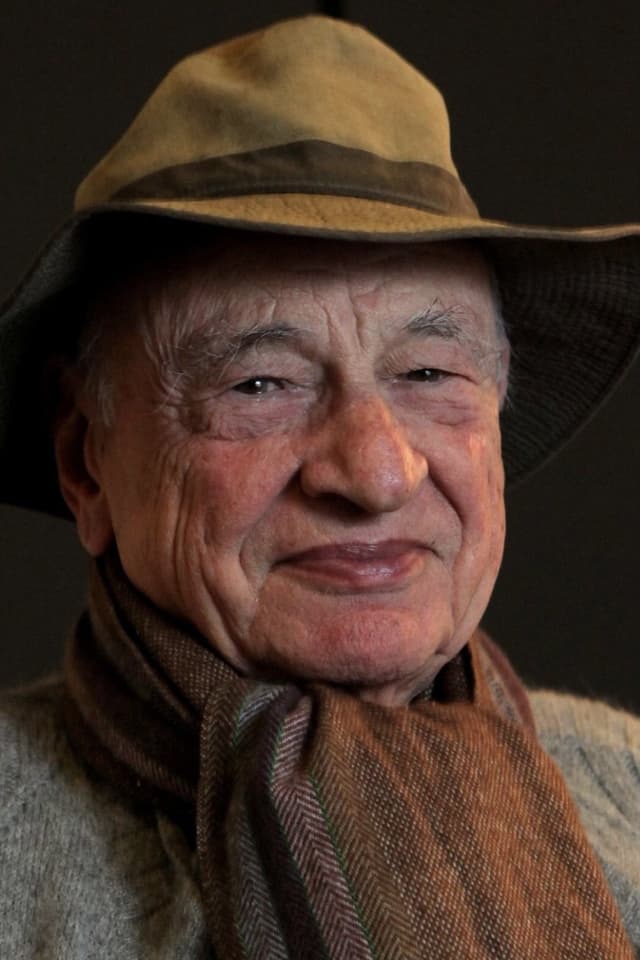
Edgar Morin (born Edgar Nahoum; 8 July 1921) is a French philosopher and sociologist of the theory of information who has been recognized for his work on complexity and "complex thought" (pensée complexe), and for his scholarly contributions to such diverse fields as media studies, politics, sociology, visual anthropology, ecology, education, and systems biology. As he explains: He holds two bachelors: one in history and geography and one in law. He never did a Ph.D. Though less well known in the anglophone world due to the limited availability of English translations of his over 60 books, Morin is renowned in the French-speaking world, Europe, and Latin America. During his academic career he was primarily associated with the École des hautes études en sciences sociales (EHESS) in Paris. At the beginning of the 20th century, Morin's family migrated from the Ottoman city of Salonica (Thessaloniki) to Marseille and later to Paris, where Edgar was born. He is of Judeo-Spanish (Sefardi) origin. When the Germans invaded France in 1940, Morin assisted refugees and joined the French Resistance. As a member of the French Resistance he adopted the pseudonym Morin, which he continues to use. He joined the French Communist Party in 1941. In 1945, Morin married Violette Chapellaubeau and they lived in Landau, where he served as a lieutenant in the French Occupation army in Germany. In 1946, he returned to Paris and gave up his military career to pursue his activities with the Communist Party. Due to his critical posture, his relationship with the party gradually deteriorated until he was expelled in 1951 after he published an article in L'Observateur politique, économique et littéraire. In the same year, he was admitted to the National Center of Scientific Research (CNRS). Morin founded and directed the magazine Arguments (1954–1962). In 1959 his book Autocritique was published. The book was a sustained reflection on his adherence to, and subsequent exit from, the Communist Party, focusing on the dangers of ideology and self-deception. In 1960, Morin travelled extensively in Latin America, visiting Brazil, Chile, Bolivia, Peru and Mexico. He returned to France, where he published L'Esprit du Temps, a work on popular culture. That same year, French sociologist Georges Friedmann brought him and Roland Barthes together to create a Centre for the Study of Mass Communication that, after several name changes, became the Edgar Morin Centre of the EHESS, Paris. Also in 1960 Morin and Jean Rouch coauthored the film Chronique d'un été, an early example of cinéma vérité and direct cinema. Beginning in 1965, Morin became involved in a large multidisciplinary project, financed by the Délégation Générale à la Recherche Scientifique et Technologique in Plozévet.
Release Date | Title | Character Name | Rating | Your Lists |
|---|---|---|---|---|
January 10th, 2024 | Kim Kardashian Theory | Self (archive) | 4.8 | |
July 8th, 2021 | Edgar Morin, journal d'une vie | Self | TBD | |
August 24th, 2019 | Edgar Morin, un penseur à Paris | Self | 4.5 | |
April 27th, 2016 | Jean-Marie Serreau, découvreur de théâtres | Self | 10 | |
May 29th, 2015 | Edgar Morin, chronique d'un regard | Self | 6.5 | |
January 1st, 2014 | Football And Immigration, 100 Years Of Common History | Self | 10 | |
October 19th, 2011 | Un été + 50 | Self | 7 | |
January 1st, 2011 | Mario Ruspoli, Prince of the Whales | Self | TBD | |
April 8th, 2009 | Here to Stay | Self | 5.6 | |
July 29th, 1995 | Aimé Césaire: A Voice for History | Self | 10 | |
December 11th, 1991 | Against Oblivion | Self | 7 | |
May 3rd, 1963 | The Lovely Month of May | Self (uncredited) | 8 | |
October 20th, 1961 | Chronicle of a Summer | Self | 7.2 |